
Uncategorised
The Decontamination Cycle – Disinfection
In the dental decontamination cycle, disinfection is a bridging step between cleaning and sterilisation. It is commonly misunderstood and often conflated with cleaning – they
THE coronavirus pandemic has made the whole world look at things differently. People in Western countries have started wearing face masks, social distancing is now almost second nature and we are all too familiar with the concept of lockdown.
The UK’s dentistry sector has undergone a crash course in how to manage during a public health emergency of unprecedented proportions.
And some of the changes imposed by the pandemic could be here to stay.
So will the lessons of the pandemic help to make dentistry even safer in the future?
“Pre-pandemic the industry took infection control seriously,” our managing director Laura Edgar explains. “Practices knew what they had to do to meet the regulations; and keep their teams and patients safe.
“I wouldn’t say the dental sector had become complacent because IPC has always been a priority in dental practice, but I think the pandemic took us all by surprise and required a re-look at our procedures and protocols in the ‘new world’.”
The emergence of a highly infectious dangerous shape-shifting pathogen with no known treatment and no cure changed all that.
Last spring the day-to-day dental sector in this country was virtually shut down overnight. And before they could reopen practices had to put in place stringent new measures to protect the health of patients and staff.
The changes saw us drawing on our network of contacts across the globe to keep up with demand for personal protective equipment (PPE), not just from traditional dental clients but also for emergency services on the Covid frontline.
Laura says the incredible surge in demand for PPE has prompted a new debate about which is better, disposable protective equipment or reusable garments.
“The answer used to be crystal clear: disposable gowns, gloves and masks were the correct way to go. They were effective, easy to use and required no maintenance but the worldwide shortage in spring has prompted a reassessment. People are asking if reusable PPE could be a sustainable model.
“The shortages also forced us to come with innovative solutions. Until the pandemic, it was standard practice to use disposable scrubs to protect from airborne materials during aerosol-generating processes (AGP) but during the first wave – when Governments all over the world were scrambling to buy up every last bit of PPE – a hybrid was developed which could be washed.”
However, disposable PPE is more convenient because once you have used it, you simply dispose of it as biohazardous waste, whereas reusable garments have to be properly laundered and maintained, and still treated as potential biohazards. When you’re working in a fast-moving practice, disposables are quick and convenient.
As Laura explains: “Unfortunately for dental practices, most of them are not set up to wash garments. You certainly can’t stick them in a plastic bag, take them to a laundrette and wash them with your other clothes. Just think of the dangers of cross-infection from someone sitting on a bus with a bag full of soiled scrubs.
“When the washable PPE began to appear, some forward-thinking dental practices invested in the right kind of washing machine – not a domestic appliance – and now they are the ones driving the investigations into reusable PPE for the future.”
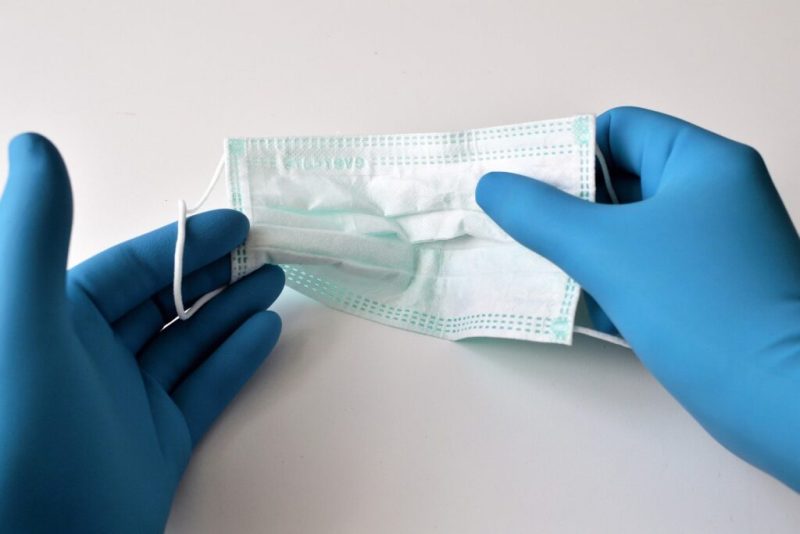
There are other sound reasons for switching to reusables. It comes as no surprise to learn reusable PPE garments are more expensive than disposables, but the financial argument is more nuanced.
Disposable products may seem inexpensive upfront, but the repeated cost of purchasing the product, the volatility of the price when demand is high, and the inevitable environmental impact of extra waste can make disposables more expensive in the long run.
But, even then, there are hidden costs which need to be factored into buying decisions.
There is a cost to decontaminating reusable garments, including the capital cost of the decontamination equipment and on-going servicing requirements. Reusables may also need to be sterilised with the attendant extra costs for the sterilisation equipment and staff labour.
And when a garment has been contaminated it must be laundered correctly to ensure the protective properties of the materials are not compromised. Again, this adds to the cost because it is both labour intensive and requires specific detergents. Afterwards, they must be thoroughly inspected to ensure the garment is ready for re-use.
Finally, if the fabric materials show signs of wear or damage a decision must be taken whether to repair it or simply remove it from the roster and replace it with a new item.
However, one would assume a reusable garment – even one with a finite life – is kinder to the environment. But, again, that has to be offset against the chemicals and energy used for decontamination, cleaning and sterilisation.
What appears, on the face of it, to be a straightforward decision – reusable good, disposable bad – is far from clear when the ‘whole life’ cost – both financial and environmental – is factored into the equation.
Maybe that is why, for now, Laura says disposable PPE is still the industry standard: “More research is needed to be sure reusable PPE is as effective as disposables. PPE is very different to a staff uniform; it needs to be robust enough to provide medical-grade levels of protection and achieving that in something that can be used multiple times is a challenge.”
Disposable PPE garments for the medical sector are made of non-woven material and intended for a single use, while the reusables are made of woven fabrics. In both cases, the material or fabric is reinforced – usually with a special membrane – that provides protection from bodily fluids.
The pandemic has changed attitudes to hygiene in other ways, too. Good hand hygiene has proven to be one of the most important methods in reducing the spread of the coronavirus.
According to a recent survey, before the pandemic, just one in ten people washed their hands for the recommended time of 18-20 seconds, whereas during the pandemic that number went up to 25%. Initially, this seemed to take suppliers by surprise (remember those empty shelves where hand gels once sat gathering dust?) but early shortages have been overcome.
And thanks to a massive year-long Government public education campaign, people are now far more likely to wash their hands – or use a sanitising gel – when they are out and about, especially before and after eating in restaurants, visiting communal places and home cleaning. Hand hygiene is no longer a dirty subject.
And who would have thought this time last year that wearing a facemask would be second nature for so many people? Although a mask-wearing culture exists in Asia (especially in countries with more recent exposure to lethal pathogens such as SARS) no such thing existed in the West until we were told to wear a mask for protection.
Will this behaviour continue when the pandemic ends? Laura certainly hopes so.
“At a much more basic level, Covid-19 has focused more attention on good hand hygiene and that’s definitely a good thing,” says Laura.
“In a dental setting staff are more aware of their environment and how important it is to keep surfaces clean; people are no longer embarrassed to wear a face mask.
“Practices across the country have reviewed their cross-contamination controls. Their infection control policies are now right at the top of their priorities and that’s good to be good for all of us.
“Habits have changed – and if they continue after the pandemic has been brought under control, we will all benefit. Doctors are already saying we could see lower infection rates during this year’s flu season thanks to the public health measures the public is taking as a result of the Covid threat.
“If that change is permanent we will all suffer from fewer coughs and sneezes in future.”
Who knows, perhaps the lasting impact of the Covid-19 pandemic will be a lasting reduction in the transmissibility of infectious airborne diseases? If it is, all of us will be healthier as a result.
In the dental decontamination cycle, disinfection is a bridging step between cleaning and sterilisation. It is commonly misunderstood and often conflated with cleaning – they
Dental Handpieces are a critical tool used in routine and complex dental treatments. Inside the head of a high-speed handpiece, a turbine the size of