Uncategorised
The Decontamination Cycle – Disinfection
In the dental decontamination cycle, disinfection is a bridging step between cleaning and sterilisation. It is commonly misunderstood and often conflated with cleaning – they

HPC Water Testing Samplers are one of our most popular products, currently used in thousands of UK dental practices. Samplers are used for dental unit waterline testing, they assess the water quality that dental units produce. This article will answer all of the common questions we get about our Samplers.
(If you were looking to purchase Samplers Click here.)
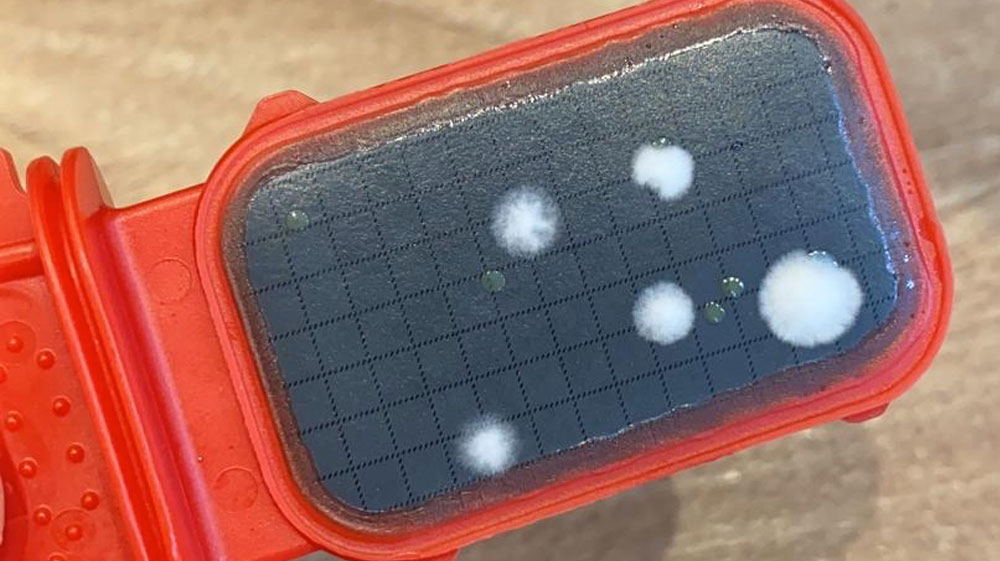
Samplers are designed for testing water quality. They are used to get an accurate reading of bacterial contamination in a water source. Easy to use, don PPE and fill the glass container to the 18ml fill line (the notch on the plastic housing) with water the 3-in-1 syringe, re-insert the paddle and lay flat, red side up for 30 seconds (no need to shake it!). Discard the water from the case, re-insert the paddle into the plastic case and label with the date of test and water source. Leave the Sampler in a suitable place, such as a draw or cupboard red side up for 7 days. After 7 days, any contamination that is present in the water source will appear on the paddle in the form of dots.
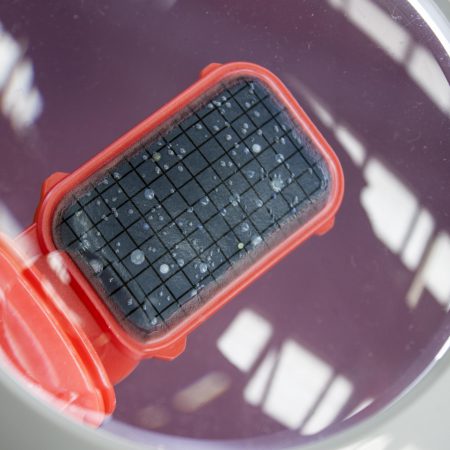
These dots are what are referred to as “colony forming units” (C.F.U). Each single dot is equal to 1 C.F.U. After the 7 day incubation period count the dots. In the UK, drinking quality is defined as less than 100 C.F.U. So if you perform a sampler test and you count less than 100 dots, or it is completely clear, your sampler has passed and your dental unit is producing drinking quality water. Over 100 c.f.u is a fail and your unit is NOT producing drinking quality water.
Firstly we would recommend you take another Sampler test to confirm the result. There can be several reasons for a fail, such as using an ineffective product in your dental unit, not following product protocol or not flushing your lines regularly.
If you are using the Alpron system, a fail usually indicates that the Alpron protocol has not been followed correctly. It is worth reviewing the protocol to ensure you are doing everything correctly. When followed correctly units treated with Alpron usually show zero c.f.u.
In either case we recommend that you use a Biofilm Removal Kit on your chair to remove any contamination. For heavily contaminated chairs you may need to use multiple kits. In extreme circumstances, where biofilm is embedded in the tubing, you may need to have the tubing replaced completely, although this is only usually the case with very old chairs.
My Sampler looks clear but there is a slime over it, what is this?
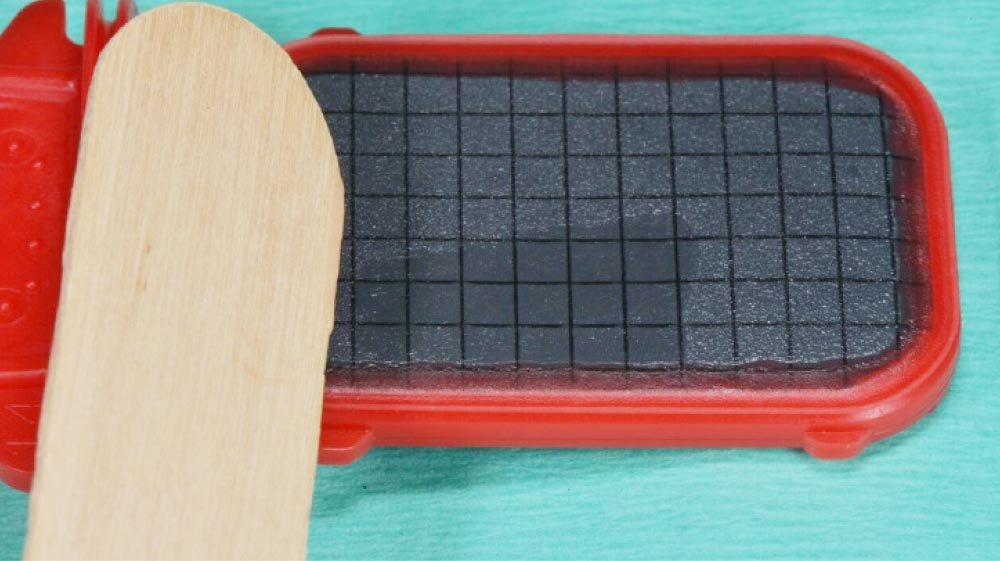
If you have what appears to be a “slime” over the paddle, this is a complete overgrowth of bacteria and a fail. This is typically seen in heavily contaminated units. An easy way to check is to run a tongue depresser or other small instrument over the paddle. Any slime will pick up and you will see a difference on the paddle.
Do larger dots count as more colonies?
The dots that grow on samplers can come in all sizes and several colours. Size and colour do not matter when counting the dots, only the total amount.
The only exception is large dots that appear “furry”. These type of results usually indicate airborne contamination, which can be caused by not correctly sealing the paddle in the plastic housing, or leaving the sampler out of its housing for too long. Furry dots can also be an indication of mould in the lines, in which case the sampler has failed. In each case, it is a good idea to perform another test.
Are Samplers the Same as Dipslides?
First things first, Samplers are not dipslides – Dipslides are a tool that are unable to provide an accurate assessment of contamination in water samples due to the inability to measure the sample amount. Any colony that shows on the old style white agar Dipslide could be as many as 100 CFU. These white dipslides can be used to see very high levels of contamination (>1000CFU per ml) but are not able to provide levels which determine potability. The Red MHPC Samplers can be used to test for C.F.U counts from 0-300 which makes it the perfect tool to test whether a DUWL is producing drinking quality water (less than 100 C.F.U).
How accurate are the HPC Samplers?
These MHPC Samplers have been proven in clinical trials to be as accurate as TVC testing in a laboratory for CFU counts under 300.
Bacterial recovery as a result of colony counts and Millipore samplers was comparable when the recoverable amount of bacteria was 102 cfuml-1 or lower.”
“3.1.1.1 A Comparison of Planktonic Bacterial Quantification using Colony Counts and Millipore Samplers. Perfectus Biomed Clinical Report Extract
The HTM01-05 advises using TVC (total viable count) testing to assess water quality in dental units. As Samplers are equivalent to TVCs, they are suitable for testing DUWLs
We often get asked if Sampler testing is required, as the HTM states routine monitoring is not required unless there is a suspected issue. However we feel that Sampler testing should be mandatory for several reasons.
Legionella Control Measure – All water systems are required to have a Risk Assessment done for Legionella. Within your practice, you have your domestic / building water system and each Dental chair has its own water system. You are required to have control measures in place for all water systems that pose a risk of harbouring legionella bacteria. These will include running temperature checks on the domestic system to make sure your hot water is hot and cold water is cold. These temperature parameters inhibit Bacteria growth and so provide reassurance that legionella would be unable to proliferate in these conditions. DUWLs do not have the ability to run hot or cold and as such alternative control measures are required. The use of a Biocide that is effective against legionella is one (Alpron) and regular sampler testing is another.
Testing with Samplers gives you a quantifiable number of the level of contamination in the dental unit. The more biofilm, bacteria and contamination, the higher the risk that Legionella could take hold. Legionella is not able to produce a biofilm on its own, it would look to attach to an existing Biofilm and begin to use the community to divide and spread. Therefore, no biofilm, less chance of an issue. Sampler testing provides useful information with which to make a judgement of risk – they are not a specific Legionella test and should not be used as such. We do offer a specific Legionella Testing Kit.
Drinking Water Regulations – The Drinking water regulations in the UK require that water bottled and given for human consumption is potable – that is less than 100 CFU per ml. The Water authorities must provide water fit for human consumption throughout the mains system. Once this water is then removed and put into a new water system, the practice takes on this responsibility. As we know through many studies and clinical evidence, contaminated DUWLs can produce highly contaminated water. This is an area that presents the greatest risk to staff and patients and therefore must be monitored. Without doing TVC testing, there is no other way of getting this assurance. Red Samplers provide evidence that you are producing drinking quality water from your DUWL.
HTM 01-05 – The Decontamination guidance for UK Dental practices requires that water, when tested, lies between 100-200 CFU per ml. The document states that “Dipslides” are not required unless there is suspicion of an issue, but to follow manufactures guidelines. Sampler testing is widely accepted by the CQC as evidence of proactive management of DUWL. In fact, many corporate groups use Samplers group-wide as evidence of proactive DUWL management.
Manufacturers Guidelines – If you are using the Alpron system, we require that testing is done if you wish to apply for certification and we encourage use of Samplers even if you do not wish to obtain certification so that you can evidence your managing your DUWL’s effectively. The CQC will ask to see your evidence of DUWL management.
Assessment of Product Efficacy – If you are not using Alpron, and either using nothing, or a different product – we would still advise testing is done so that you are able to get some idea of what is going on inside your dental unit to ensure you are reducing risk of any infection from aerosols. This information would provide information about the efficacy of the product you have chosen and if you’re producing potable (drinking quality) water from your Dental unit.
As you can see there are huge benefits to using Samplers. Samplers are a low cost way to demonstrate you are being active with your DUWL management.
We recommend each dental chair is tested every 3 months.
Yes, Samplers can be used on any water source to check its quality. In a dental setting we often recommend samplers are used to test RO units. Filters on RO machines often fail and they end up producing water that is not potable (drinking quality).
Yes we do! When you complete your quarterly Sampler test, record the results and required information in your Audit Sheet (you can download audit sheets here). If the Sampler is a pass we will issue you a quarterly certificate, showing evidence that you are producing drinking quality water from your unit. Email any results to csd@qwsonline.co.uk.
No, we only certify practices that use Alpron in DUWLs. This is due to the fact we have clinical proof that Alpron works to prevent contamination in DUWLs, which we don’t have for other products.
Yes, see our YouTube video on how to perform a sampler test.
Hopefully this article answered any questions you had on Samplers and Dental Unit Waterline Testing.
At Aura we offer a service called Compliance Club, which assists practices in keeping to the quarterly audit routine by sending out as many samplers as you need when you need them. In addition you receive samplers at the reduced rate of £4.70 and get a permanent 15% discount off our entire product range. You can also add Alpron and BC-San onto your package at a reduced rate for a total DUWL management protocol.
If you would like to join the thousands of practices in the Aura Compliance Club, or would like anymore information drop us a message below.
In the dental decontamination cycle, disinfection is a bridging step between cleaning and sterilisation. It is commonly misunderstood and often conflated with cleaning – they
Dental Handpieces are a critical tool used in routine and complex dental treatments. Inside the head of a high-speed handpiece, a turbine the size of