
Uncategorised
Introducing Compliance Club Digital
If you’re a Compliance Club member, you already know the drill: complete your audit, send us your results, and wait for your certificate to land

Biofilms containing many types of bacteria have long been known to develop in dental unit waterlines and spread infection. The risk of infection is not just theoretical. The Lancet has detailed the death of an 82 year old Italian woman caused by legionnaires disease. The bacteria was traced back to equipment in a dental surgery she had visited.
The risks to staff and patients are very real, in particular to vulnerable patients such as those receiving immunosuppressants, elderly or young patients and those who choose to smoke and drink.
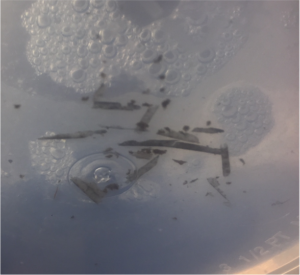
Biofilm extracted from a dental unit
A Biofilm is defined as “integrated microbial communities, quite complex in structure, very prevalent in nature and very difficult to remove from situations where they are undesirable”. These “communities” protect themselves inside the extra polymeric substance or “Slime”, where given the correct environment they can proliferate exponentially.
By design dental units are the perfect breeding ground for biofilms for several reasons.
The dental unit tubing is plastic (hydrocarbon) based. This provides a respiratory resource for many microbes present in water.
With a small diameter but very long length, often coiled up, the surface area in relation to the volume of water that passes through and therefore over that surface is at least 11 times more than that in a standard domestic water pipe. Biofilms need a surface to attach to and the more surface they are given, the more they attach.
The flow rate of the water is low and usually intermittent, allowing microbes within the water to adhere to the inner surface of the tubing.
Throw in the ambient temperature of the average surgery and the fact that the water itself contains sufficient nutrients for most microbes to be happy.
Click any step above to see a description of that stage in dental unit waterline biofilm formation.
The 5 stages of biofilm formation – Attachment, growth, maturation, detachment and redevelopment.
Once a biofilm is established other factors come into play. The microbes within the biofilm community work together by recycling nutrients, for example. The structure of the biofilm becomes even more complex as the production of a protective polysaccharide coating resists attack from most types of ‘chemical’ warfare e.g bleach
And, all the time the microbes are multiplying and seeding the fresh water as it passes across the biofilm. This is why the microbial counts from water coming out of the unit fail, even though the water going into the unit is fine.
Mature biofilms harbour a variety of microorganisms (Pankhurst, 2003; Walker et al, 2005) including legionella and Escherichia coli 0157. They can also carry oral bacteria if dental handpiece anti retraction valves fail.
As the number of microbes increases, so does the risk of higher numbers of potentially harmful types being present (Martin, 1987; Walker et al, 2003). When this contaminated water is aerosoled, as happens when it passes through dental handpieces, the risk of human infection is increased.
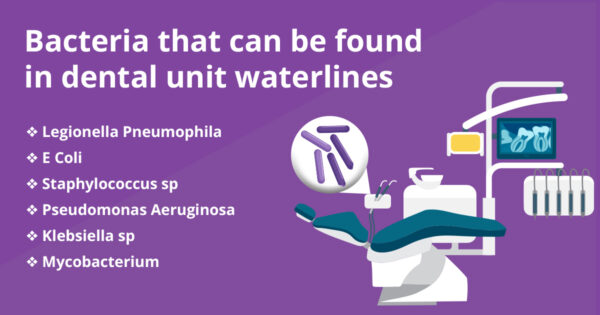
Just some of the bacteria that can be found in dental unit waterlines.
A variety of products have been developed to treat biofilms and maintain dental units’ water to the drinking water standard of <100cfu (European Council, 1998, Current UK standard). Many only claim to reach <200cfu, which is the American standard; Always check that the product you choose is capable of achieving the correct standard of water quality.
Any treatment protocol should include, at least:
A system that can achieve all of the above will ensure you are complying to the HTM01-05 regulations, as well as drinking water and legionella (L8) legislations.
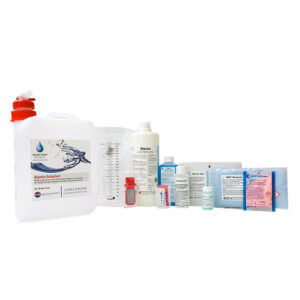
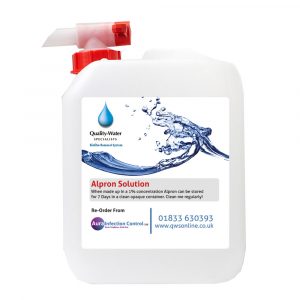
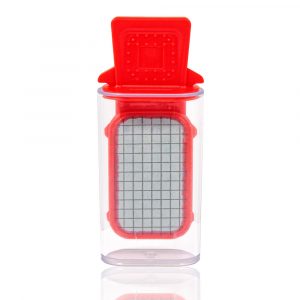
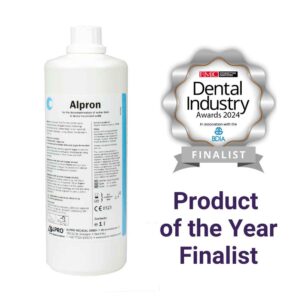
The Alpron and BRS system has been dentistry’s product of choice for treating dental units, since its introduction over 20 years ago. The Alpron system has everything needed to ensure dental units are compliant and safe.
We hope you found this article useful. If you need any of the products mentioned in this article, you can purchase direct from us below. In addition we are more than happy to talk you through the Alpron system. Get in touch with our team today.
Did you know we’re not just a waterline company? We have a full range of dental infection control products, from surface cleaning to decon equipment we have it all. See what we offer here.
If you’re a Compliance Club member, you already know the drill: complete your audit, send us your results, and wait for your certificate to land

In the dental decontamination cycle, disinfection is a bridging step between cleaning and sterilisation. It is commonly misunderstood and often conflated with cleaning – they